|

Design of Fluid-Thermal Systems (leaf blower)

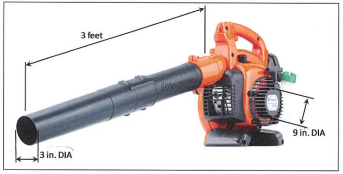
The leaf blower shown operates steadily and discharges air at the exit velocity of 180 ft/s. Assuming that the discharge pipe is of constant diameter with f = 0.02, that the minor losses at the blower inlet are Kinlet=1.3 and that the air density is rho=0.0735 lbm/ft3 , A) Estimate the total pressure increase across the blower; B) Estimate the motor power (in HP) if the blower efficiency is 75%. Note: 1HP =550 ft-lbf/s. when writing the energy equation, clearly define the end points.
How useful was this post?

Click on a star to rate it!

Average rating 0 / 5. Vote count: 0

No votes so far! Be the first to rate this post.

We are sorry that this post was not useful for you!

Let us improve this post!

Tell us how we can improve this post?

Similar Posts

  • The Reynolds Experiment

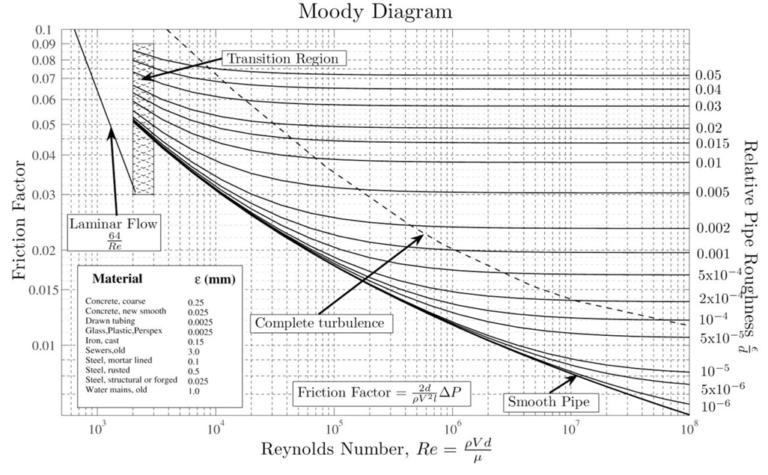
    Background and Theory This laboratory aims to recreate the Moody diagram.  Moody plotted the Moody Diagram in 1944, and it is now most famous and useful tool in fluid mechanics. The accuracy of the Moody chart is +/- 15 percent [1]. “The Moody Chart gives a good visual summary of laminar and turbulent pipe friction…

  • |

    Air Distribution System Design

    Air distribution systems comprise air handlers, ductwork, and related components used for heating, ventilation, and air conditioning in buildings. When designing an air distribution system (air conditioning system) for industrial spaces you should prioritize creating a safe and comfortable environment with minimal health risks for workers. The indoor climate design of an industrial hall should…

  • Automotive Aerodynamics 101

    Have you ever wondered why some cars are faster and more efficient than others? Well, it all comes down to something called automotive aerodynamics. The field of automotive aerodynamics involves examining the airflow around a vehicle. The goal is to diminish drag and wind noise and avoid unintended lift forces contributing to aerodynamic instability, particularly…

  • Computational Fluid Dynamics

    Computational Fluid Dynamics (CFD) has undoubtedly matured into a vital tool in both industrial applications and academic research. Initially, this field—commonly known by its acronym CFD—was primarily associated with high-tech engineering sectors like aeronautics and astronautics. However, it has swiftly evolved into a widely adopted methodology for tackling complex challenges in modern engineering practice. Originating…

  • | |

    Surface Tension of Liquids

    Background and Theory This laboratory experiment investigates the surface tension of different working fluids and how contamination can drastically affect surface tension. Surface tension is a result of the molecules deep within the fluid repelling each other while the molecules at the surface attract each other [1]. Introducing contaminates like detergents into the surface of…

  • The Relief Valve

    The relief valve is designed or adjusted to open at a specific set pressure, ensuring that pressure vessels and other equipment are not exposed to pressures exceeding their intended limits, thus protecting them. Pressure relief valves are commonly used in hydraulic systems, but they frequently fail under harsh conditions. To ensure the dependable operation of…