
Buzz, Squeak, and Rattle (BSR) in Vehicles: What It Is and Why It Matters?
Executive Summary
Buzz, squeak, and rattle—collectively known as BSR—are intermittent noises that significantly influence customer perception of vehicle quality. Buzz refers to short, impact-triggered sounds at higher frequencies, squeak is a friction-induced noise caused by stick–slip motion between two parts, and rattle results from impact between loose components. Automakers care deeply about BSR because it drives warranty costs and negatively affects perceived quality, especially in today’s quieter electric vehicles where such noises are more noticeable. The underlying science points to relative motion, incompatible material pairs, and insufficient stiffness or constraint as root causes. Effective prevention strategies combine force isolation, modal separation, structural rigidity, and material-pair compatibility, validated early through module-level tests and squeak-specific rigs (Chen & Trapp, 2012; Shin & Cheong, 2010; Yoon et al., 2025).
What Is BSR and Why Do Automakers Care?
As overall cabin noise has decreased—particularly with the rise of electrified powertrains—intermittent noises such as buzz, squeak, and rattle (BSR) have become more apparent and problematic. Various forms of media routinely compile vehicle evaluations and opinions through surveys and test drives, and excerpts from these publications underscore how even minor squeak and rattle events can disproportionately shape a customer’s perception of performance and build quality (Chen & Trapp, 2012).

Beyond reputation, BSR has a tangible service impact: it is often difficult to reproduce and diagnose at the service center, which can lead to multiple repair visits and heightened customer dissatisfaction. This diagnostic challenge compounds the importance of addressing BSR early in design, since low‑noise electric and hybrid vehicles expose previously masked noises and intensify their effect on perceived quality and loyalty (Yoon et al., 2025; Chen & Trapp, 2012).
The Science Behind BSR
Understanding the science behind buzz, squeak, and rattle (BSR) is essential for diagnosing and preventing these issues in vehicles. While BSR noises may seem minor, they stem from complex physical mechanisms such as impact, friction-induced stick–slip, and resonance. These phenomena not only affect perceived quality but can also signal underlying design or maintenance concerns. By exploring how and why these noises occur, engineers can develop effective strategies to minimize them and improve overall customer satisfaction.

Why does my car sound like it’s buzzing?
Buzz is best understood as a short‑duration resonant response caused by vibration from the part itself or from a surface it contacts: a transient input (often a micro‑impact or vibration burst) excites a local feature at or near its natural frequency, producing a brief but noticeable “zing” or “hum.” Inside the cabin, buzz commonly occurs in features like door‑edge lips, small brackets, or trim tabs where a light contact or impulse triggers a high‑Q local resonance. While an interior buzz is generally not severe (though certainly annoying and detrimental to perceived quality), a humming noise at highway speeds coming from outside the vehicle deserves immediate attention. For example, a hum that begins around ~40 mph, especially from the front, often points to wheel‑bearing wear or uneven tire wear; inspection for bearing play or roughness by lifting the vehicle and rotating the wheels is recommended. In practice, the source of an exterior hum can vary—from worn wheel bearings or tires to issues in the transmission—so quick identification is essential for vehicle health and safety and should not be ignored. Mitigation for interior buzz focuses on removing the impact/vibration path, detuning the resonant frequency (via mass or stiffness changes), and adding damping so the response decays rapidly (Chen & Trapp, 2012). To distinguish short resonant buzz events from longer rattle impacts or frictional squeaks, module tests that reproduce road‑equivalent excitations and use microphone arrays are effective, and psychoacoustic percentile measures (e.g., N10 loudness) help quantify the audibility of these transients (Shin & Cheong, 2010).
Why does my car make a squeaking sound when I drive?
Squeak is fundamentally a friction‑induced phenomenon driven by stick–slip at the interface of two rubbing surfaces. When static friction exceeds kinetic friction, the interface alternates between sticking (elastic energy storage) and slipping (energy release), creating a non‑smooth motion that radiates as squeak—often with significant energy in the mid‑to‑high‑frequency bands. The friction curve’s Stribeck region can act like negative damping, making systems prone to instability unless designers add damping, raise local stiffness, lower friction contrast (e.g., coatings or lubrication), or keep the operating point out of the unstable regime (Chen & Trapp, 2012).

A squealing noise coming from your car can sometimes serves as an important warning signal—it is the vehicle’s way of indicating that something may not be functioning properly. Squealing noises are typically caused by friction or wear in various components, such as brakes, serpentine belts, or even engine parts. Interior squeaks, however, are usually the result of material incompatibility that promotes stick–slip conditions at trim interfaces.
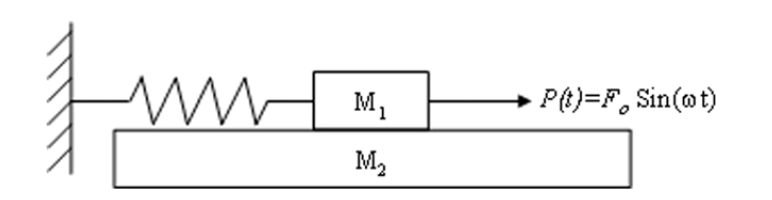
While these squeaks are rarely dangerous, they are highly annoying and can significantly affect perceived quality. Because stick–slip propensity depends on contact stiffness and relative sliding speed, a single‑stiffness bench test can mislead; tunable rigs that adjust stiffness (≈8–89 N/mm) and speed (1–10 mm/s) show that frequency and severity (VAL) generally increase with both variables, with material‑specific sensitivities (e.g., POM > PP‑TDGX ≈ PC in reported ranges). This enables scenario‑based material selection for snap‑fits, clips, and trim interfaces before hardware freeze (Yoon et al., 2025).

motion/displacement or vibration will just be the sinusoidal and is smooth. However, if the pressure or the friction coefficient is not zero, then there will be stick-slip motion
Why is my car making a rattling noise when I drive?
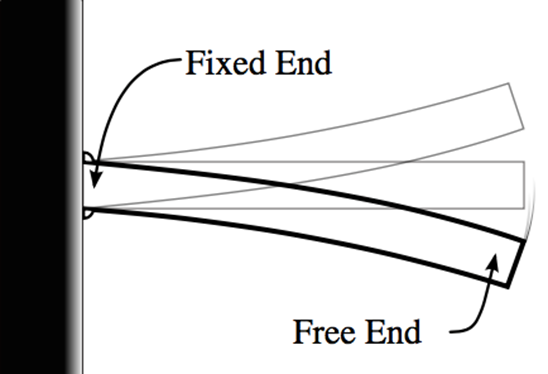
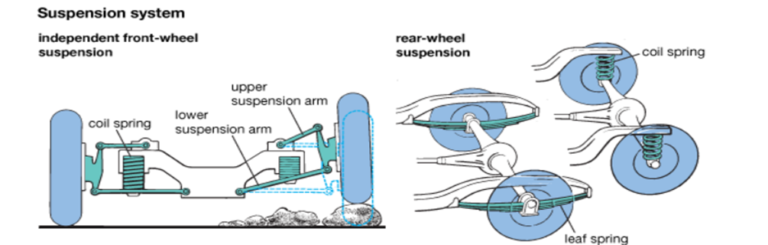
From a physics standpoint, rattle arises when two components intermittently impact each other; the contact–separation–contact cycle produces broadband noise with dominant low‑frequency content, but it can excite higher modes depending on local geometry and stiffness. One of the most frequent complaints drivers report is a rattling noise while driving, which often becomes noticeable at specific speeds or when traveling over rough terrain. Common culprits for rattles coming from outside the vehicle include a loose heat shield around the exhaust, unsecured exhaust components, or worn suspension and steering parts that allow excessive movement and vibration.
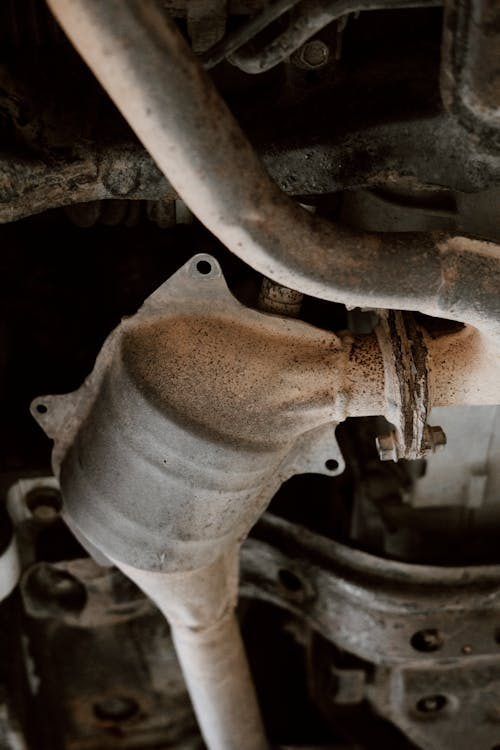
These conditions create opportunities for impact between components, amplifying noise and discomfort. Typical sources for rattles coming from inside the vehicle also include glove‑box doors, latches/ door strikers and trim interfaces. Preventing rattle centers on maintaining proper gaps /clearances and constraints, detuning local resonances, and ensuring that component modal frequencies do not align with major body or suspension modes (Chen & Trapp, 2012). Module‑level experiments on instrument panels demonstrate how impact‑type events can be localized and ranked using near‑field acoustic holography and psychoacoustic metrics to prioritize corrective actions (Shin & Cheong, 2010).
What do all BSR have in common?
Bringing these mechanisms together, the common enablers of BSR are relative motion at interfaces, inadequate local stiffness or constraint, and material pairs with high stick–slip propensity under the actual stiffness–speed environment. The most reliable prevention path is physics‑guided and perception‑aligned: minimize excitations and mode alignment, raise local rigidity and constraint to cut relative motion, and select/treat material pairs proven quiet under the contact conditions your design will experience (Chen & Trapp, 2012; Shin & Cheong, 2010; Yoon et al., 2025).
Preventing BSR in a vehicle
Preventing BSR begins with “designing out” the problem using KISS principles—keep clearances generous (K), isolate potential contact paths (I), add structure and stiffness where local modes could resonate (St), secure interfaces to eliminate relative motion (Se), and select compatible material pairs (M) so stick–slip never starts. Applied early, these fundamentals are reinforced by system‑level levers: reduce excitation at the source (tires/suspension/body mounts), separate component modes from dominant body/suspension modes, and raise local rigidity at attachments to minimize motion (Chen & Trapp, 2012). Equally important is early detection and test‑driven iteration: shift BSR evaluation upstream with module‑level rigs that reproduce road inputs, use near‑field acoustic holography to localize sources, and rank fixes with psychoacoustic metrics (e.g., loudness, sharpness, roughness, fluctuation, N10/N50) so teams prioritize what customers will actually hear (Shin & Cheong, 2010).
For squeak‑prone interfaces, tunable friction tests that vary contact stiffness and sliding speed enable scenario‑based material selection (e.g., choosing polymers less sensitive to stick–slip in the expected stiffness–speed window), reducing risk before hardware freeze (Yoon et al., 2025). Finally, enable plant quality with robust fastening, torque‑angle control, and tolerance management—because build variation, environment, and aging can reintroduce relative motion and undo good design—closing the loop from concept to production with disciplined verification gates (Chen & Trapp, 2012; Shin & Cheong, 2010).This integrated approach ensures that BSR is addressed proactively rather than reactively, reducing costs and improving customer satisfaction.
Common Culprits of Common Sounds
| Description | In Most Cases |
| Rattle | Poor Fastening, Lack of Clearance |
| Squeak | Part Chafing, Material Incompatibility |
| Creak | Metal-Metal Chafing |
| Itch | Material Incompatibility (windshield seals, leather) |
| Clunk | Underbody component contact (large in size) |
| Buzz | Two surfaces just barely contacting |
Conclusion
Buzz, squeak, and rattle (BSR) may seem like minor annoyances, but they carry significant implications for vehicle quality, customer satisfaction, and brand reputation. As vehicles become quieter—especially with the rise of electric powertrains—these intermittent noises stand out more than ever, influencing purchase decisions and warranty costs. The science behind BSR reveals that these sounds stem from predictable physical mechanisms: impact, friction-induced stick–slip, and resonance. Understanding these fundamentals enables engineers to design out problems early using proven strategies such as the KISS principles, robust material selection, and structural optimization. Coupled with early detection methods, advanced testing, and plant-level quality controls, these approaches ensure that BSR issues are addressed proactively rather than reactively. Ultimately, preventing BSR is not just about eliminating noise—it is about delivering a perception of durability and refinement that strengthens customer trust and competitive advantage.
References
- Chen, F., & Trapp, M. (2012). Overview on vehicle buzz, squeak and rattle. In Automotive Buzz, Squeak and Rattle: Mechanisms, Analysis, Evaluation and Prevention (Ch. 1). Elsevier.
- Shin, S.-H., & Cheong, C. (2010). Experimental characterization of instrument panel buzz, squeak and rattle (BSR) in a vehicle. Applied Acoustics, 71(12), 1162–1168. https://doi.org/10.1016/j.apacoust.2010.07.006
- Yoon, J. Y., Lee, S. M., Park, Y., Lee, K.-W., Sung, D., Yoon, S., & Choi, B.-H. (2025). Development of a tunable test method for characterizing friction-induced squeak noise in automotive interior plastics. Polymer Testing, 152, 108991. https://doi.org/10.1016/j.polymertesting.2025.108991

Admiring the persistence you put into your blog
and detailed information you present. It’s awesome to come across a blog every once in a while
that isn’t the same outdated rehashed information. Wonderful read!
I’ve bookmarked your site and I’m adding your RSS feeds to my Google account.
What’s Taking place i’m new to this, I stumbled upon this I have discovered
It positively helpful and it has aided me out
loads. I hope to give a contribution & help different users like its aided me.
Good job.
This post gives clear idea in favor of the new people of blogging, that truly
how to do blogging.
Keep on working, great job!
Hey would you mind letting me know which hosting company you’re working with?
I’ve loaded your blog in 3 completely different internet browsers and
I must say this blog loads a lot quicker then most. Can you suggest a good internet hosting provider at a honest price?
Many thanks, I appreciate it!
Fantastic goods from you, man. I’ve have in mind your stuff previous to and you’re simply extremely fantastic.
I really like what you have acquired here, certainly like what you are saying and the best way through which you say it.
You make it enjoyable and you still take care of to stay it sensible.
I can not wait to learn much more from you.
This is really a great site.
I don’t even understand how I ended up right here, but I believed this
post used to be good. I don’t understand who
you’re however definitely you’re going to a well-known blogger if you happen to are not already.
Cheers!