
DC Motor Basics: How It Works, Types & Parts Explained
What is a DC motor? Why are DC motors important? We’re going to answer those questions and much more. Whether you’re a budding engineer or just someone curious about the tech that makes the world go around, this article breaks down DC motor basics—how DC motors work, their parts, types, torque, and typical power ratings—so you walk away with a solid foundation.
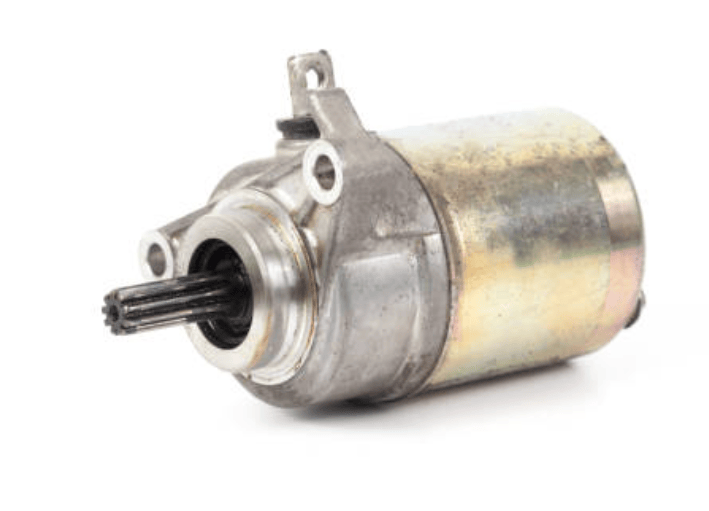
What is the DC Machine?
A DC motor is an electrical machine that converts direct current electricity into mechanical energy. DC machines are easy and flexible to control and widely used since there is an established manufacturing technology to build them.
Key Parts of a DC Motor
Before getting into how a DC motor works, it helps to know what’s actually inside one. Every DC motor, regardless of type, is built from the same core parts:
- Stator (yoke): the stationary outer housing that supports the field structure and provides a path for magnetic flux.
- Field winding / poles: coils (or permanent magnets) mounted on the stator that create the magnetic field the armature reacts against.
- Armature (rotor): the rotating core wound with conductors; current flowing through it interacts with the field to produce torque.
- Commutator: a segmented ring on the shaft that reverses the current direction in the armature windings at the right moment, keeping torque acting in one rotational direction.
- Brushes: typically carbon or graphite contacts that ride on the commutator, carrying current from the stationary supply into the rotating armature.
- Shaft: transmits the mechanical output torque to whatever the motor is driving.
Direct Current Motor Applications
DC motors find a wide range of applications across industries and everyday life. They are essential components in cranes, where their precise control and high torque capabilities are utilized for lifting heavy loads. Conveyors rely on direct current motors for smooth material handling, ensuring products move efficiently along production lines. Pumps and fans benefit from DC motors’ ability to deliver consistent and adjustable flow rates, making them ideal for applications requiring controlled fluid movement and ventilation.

In machine tools, DC motors drive cutting and shaping processes with accuracy and reliability. Additionally, direct current motors power air compressors, providing compressed air for various industrial processes. In the realm of entertainment and leisure, DC motors are the driving force behind toys, bringing joy and amusement to children worldwide. Even in automotive engineering, DC motors play a crucial role as motor starters in cars, initiating the combustion engine with precision and efficiency.
How are DC Motors Classified? (Types of DC Motors)
DC machines are classified based on how the field winding is connected. The field windings can be operated in different configurations, depending on the winding connections. Windings at the stator (field winding, can be magnets as well) provide a magnetic field. Windings on the rotor (armature) produce current and generate a Lorentz force.
1) A shunt motor has its field winding connected in parallel with the armature.
2) A series motor features its field winding connected in series with the armature.
3) A compound motor combines both shunt and series field windings in its design.
Brushed DC Motor
In a brushed DC motor, current flowing through a commutator and brush connected to the rotor generates the magnetic field. Brushes, typically made of carbon, can be either separately excited or self-excited. The stator, which encloses the motor’s components, houses the magnetic field. The coil winding on the rotor can be in series or parallel, creating either a series-wound or shunt-wound DC motor.
Brushless DC Motor (BLDC)
Brushless DC motors, or BLDC motors, operate using a permanent magnet synchronous electric motor driven by direct current and an electronically controlled commutation system, which produces rotational torque by changing phase currents. These motors are also known as trapezoidal permanent magnet motors.
Unlike brushed DC motors, which rely on mechanical contact with the rotor, BLDC motors use electrical commutation. A BLDC motor consists of a magnet rotor and a stator with a sequence of coils. While the permanent magnet rotates, the current-carrying conductors remain fixed in position.
Separately Excited DC Motor
An interesting variation is the separately excited DC machine, where the field winding receives power from a distinct voltage source, enabling precise control over the motor’s behavior. The operations of the armature current and field current do not hinder each other, but together they represent the total input power.
How Does a DC Motor Work?
At its core, a direct current motor is a device that transforms electrical energy into mechanical motion. Its basic structure is pretty straightforward: there’s a stationary part called the stator and a rotating part called the rotor. The stator contains permanent magnets or field windings that generate a magnetic field, while the rotor houses the armature windings through which current flows. When you send an electric current through the armature windings, the interaction between the magnetic fields creates a rotational force—and voilà, motion.

Fleming’s Left-Hand Rule and the Force Equation
The direction of the force that spins a DC motor isn’t random—it follows Fleming’s Left-Hand Rule, the standard way engineers reason about motor action. Point the first finger of your left hand in the direction of the magnetic Field, your second finger in the direction of the Current, and your thumb gives the direction of the resulting Force (motion). It’s an easy way to remember the relationship between field, current, and force.
That relationship is captured by the motor force equation:
F = B × I × L
Where F is the force on the conductor (in newtons), B is the magnetic flux density (in teslas), I is the current flowing through the conductor (in amps), and L is the length of the conductor within the magnetic field (in meters). The total force—and therefore torque—scales with how much current you push through the armature and how strong the field is.
What are the Power Losses of a DC Motor?
Just like a car burning fuel, a DC motor has its own energy considerations. The power that goes into the motor isn’t all converted into mechanical power—there are losses along the way. The losses that occur in a DC machine can be divided into five basic categories (see picture below). You’ve got copper losses from the resistance of the windings (I²R losses), and these are just a few. There are additional losses such as eddy current losses, hysteresis, and friction. All these losses are inevitable when dealing with a direct current motor.

DC Motor Torque and Power Transfer
Speaking of power, let’s talk about how it’s transferred. The motor drive system—a combination of the motor and its control electronics—ensures that the power source provides the right amount of current at the right time, coordinating the energy flow to keep the motor running smoothly.

Torque-Speed Curves: How DC Motor Performance Changes with Load
Torque and speed are the two defining measures of a DC motor’s performance, and they work together. The torque-speed curve is a graphical representation of this relationship, showing how much twisting force (torque) the motor generates at different rotational speeds. The relationship between speed and torque varies dramatically across different types of motors and also between manufacturers.

Controlling DC Motor Speed and Torque: Separately Excited DC Machines
Controlling a DC motor means balancing just the right amount of current and field strength. This is where the separately excited DC machine shines. By adjusting the voltage applied to the field winding independently of the armature, you can modify the motor’s speed and torque with precision.

How Do You Calculate Torque on a DC Motor?
Now, let’s look at how torque is generated in a DC motor. As current flows through the armature windings, it interacts with the magnetic field from the stator. This interaction creates a force that twists the rotor. The more current you send, the stronger the resulting torque, assuming field strength stays constant. The total force acting on the armature equals the force acting on a single turn of coil multiplied by the number of total turns.

What Does Back EMF Do to a Motor?
As the armature of a DC motor turns due to the driving torque, its conductors traverse the magnetic field, resulting in the induction of an electromotive force (EMF) similar to a generator. This induced EMF opposes the applied voltage V (Lenz’s law) and is termed back EMF or counter EMF (Eb). If there is no load on the motor (i.e., the motor can rotate freely with no friction), the rotational speed of the motor will increase until the back EMF exactly matches the voltage supplied to the motor.

How Much Power Can a DC Motor Handle? Typical Ratings
A DC motor’s “capacity” usually refers to its rated voltage, torque, and power output—the combination that determines what job it can realistically do. These ratings vary enormously by motor size and type:
| Motor Class | Typical Voltage | Typical Speed | Typical Power |
|---|---|---|---|
| Small hobby/toy DC motor | 1.5–12 V | 3,000–12,000 rpm | Fractional watts to a few watts |
| Automotive starter motor | 12–24 V | 1,000–3,000 rpm | 1–3 kW (brief, high-torque burst) |
| Industrial brushed DC motor | 90–500 V | 750–3,000 rpm | 0.5–200+ kW |
| Large DC traction/industrial motor | 500–1,000+ V | 300–1,800 rpm | 200 kW–several MW |
These figures are general references, not design specs—always check a specific motor’s nameplate or datasheet for its actual rated voltage, current, torque, and continuous-duty power before sizing it for an application.
Advantages and Disadvantages of a DC Motor
Brushed DC motors exhibit good performance in starting and speed regulation. They boast a relatively high torque density and operate smoothly with a wide range of speed regulation. These motors also offer strong overload capability and low electromagnetic interference. However, a drawback of DC motors is their structure, which involves sliding contact between the commutator and the brush, leading to sparks and mechanical wear. This results in a relatively short life expectancy and high maintenance costs, raising concerns about reliability.
DC Motor vs. AC Motor: Which Should You Use?
DC motors and AC motors solve similar problems in different ways. DC motors are generally simpler to control at variable speeds and deliver strong torque right from a standstill, which is why they dominate applications like starters, small actuators, and precision positioning. AC motors, on the other hand, tend to be more rugged, lower-maintenance (especially induction types with no brushes), and better suited to constant-speed industrial loads. For a full breakdown of how AC motors work and how they stack up, see our guide to AC Motors.
If you want to go beyond the basics and dig into the equations, inputs/outputs, and speed-control modeling behind a DC motor, check out our deeper dive in DC Motor Design.
DC Motor Basics: Frequently Asked Questions
What is a DC motor in simple terms?
A DC motor is a device that converts direct current electrical energy into mechanical rotation. Current flowing through windings on the rotor interacts with a magnetic field from the stator, producing a force that spins the shaft.
What are the main types of DC motors?
The main types are brushed DC motors (shunt, series, and compound wound), brushless DC motors (BLDC), and separately excited DC motors, which differ in how the field winding is powered and connected relative to the armature.
What determines a DC motor’s capacity or power rating?
A DC motor’s capacity is defined by its rated voltage, current, torque, and continuous power output, usually listed on its nameplate or datasheet. These ratings range from fractional watts in small hobby motors to multiple megawatts in large industrial and traction motors.
What is back EMF in a DC motor?
Back EMF is the voltage induced in the armature windings as they rotate through the motor’s magnetic field, opposing the applied supply voltage. It naturally limits motor speed and current, acting as a built-in regulating mechanism.
Is a DC motor better than an AC motor?
Neither is universally “better”—it depends on the application. DC motors offer simpler variable-speed control and strong starting torque, while AC motors are generally more rugged and lower-maintenance for constant-speed industrial use.
Conclusion
Grasping the fundamentals of DC motors—their parts, how they work, the types available, and how torque, losses, and back EMF shape their performance—is essential for anyone curious about electrical machinery. DC motors remain a cornerstone of modern engineering thanks to their simplicity, efficiency, and versatility. Whether powering a toy or a crane, the principles behind DC motors continue to drive innovation. If you’re ready to go deeper, our DC Motor Design guide covers the modeling equations, and our AC Motor guide shows how the alternating-current alternative compares.
Discover more from Engineering Cheat Sheet
Subscribe to get the latest posts sent to your email.


