
Quality vs. Durability in Cars: An Engineer’s Look at Why Japanese Vehicles Last Longer
If you have ever owned a Toyota, Honda, Lexus, or another Japanese vehicle, you have probably heard the same comment: “Japanese cars just seem to last forever.” At the same time, American automakers such as Ford, General Motors, and Stellantis have spent decades trying to overcome a reputation for inconsistent quality and reliability.
But why?
Is it simply because Japanese engineers build better cars? Are American vehicles poorly designed? Or is there something deeper happening inside the engineering and manufacturing process?
The answer is much more complicated. Vehicle quality and durability are not determined by one engineering decision, one factory, or even one company. They are the result of hundreds of interconnected decisions involving vehicle design, manufacturing, suppliers, validation, quality control, problem solving, materials, assembly processes, and company culture.
Having worked in automotive engineering, I have seen firsthand how difficult it is to bring all of these pieces together. I have seen companies improve their initial quality, and I have seen it decline. A vehicle can have an excellent design which is durable and still suffer from poor initial quality if a supplier produces inconsistent components. Likewise, a vehicle can have excellent initial quality but develop durability problems years later if components were not adequately validated for long-term use.
This distinction is important because quality and durability are related, but they are not the same thing. This article looks at quality first, then durability, and the engineering systems behind each.
Key takeaways:
- Initial quality and durability measure two different things — one is about the first 90 days, the other is about the next 10–15 years.
- Japanese automakers built their reputation through standardization, proven components, Lean Manufacturing, and strong supplier collaboration — not secret engineering knowledge.
- Real-world data (J.D. Power’s IQS and VDS studies) shows that improving initial quality does not automatically improve long-term durability — they have to be engineered separately.
- Supplier relationships are an engineering capability, not just a purchasing function, and the data backs this up.
- Durability testing capability itself is a resource companies can invest in or cut — and cuts to that capability carry real trade-offs.
What Is Automotive Quality?
Before comparing Japanese and American vehicles, we need to define what we actually mean by “quality.”
When most people say a vehicle has good quality, they are usually talking about initial quality. Initial quality measures how well a vehicle is built and how few problems it has. This can include:
- Fit and finish
- Squeaks and rattles
- Electrical problems
- Warning lights
- Software issues
- Water leaks
- Poor assembly
- Defective components
- Any problem discovered during the first few months of ownership
A vehicle with excellent initial quality reaches the customer with very few defects. Initial quality is a useful measure for manufacturing facilities, as it directly reflects whether they are assembling the vehicle in a consistent manner as designed. Are they breaking clips or missing bolts, which can result in a buzz, squeak, or rattle? Are they putting the right parts on the correct vehicle? Are they ensuring that none of the parts they are installing are broken? When the body in white is being welded together, can they ensure there isn’t any mismatch of panels leading to sealing concerns or water leaks?
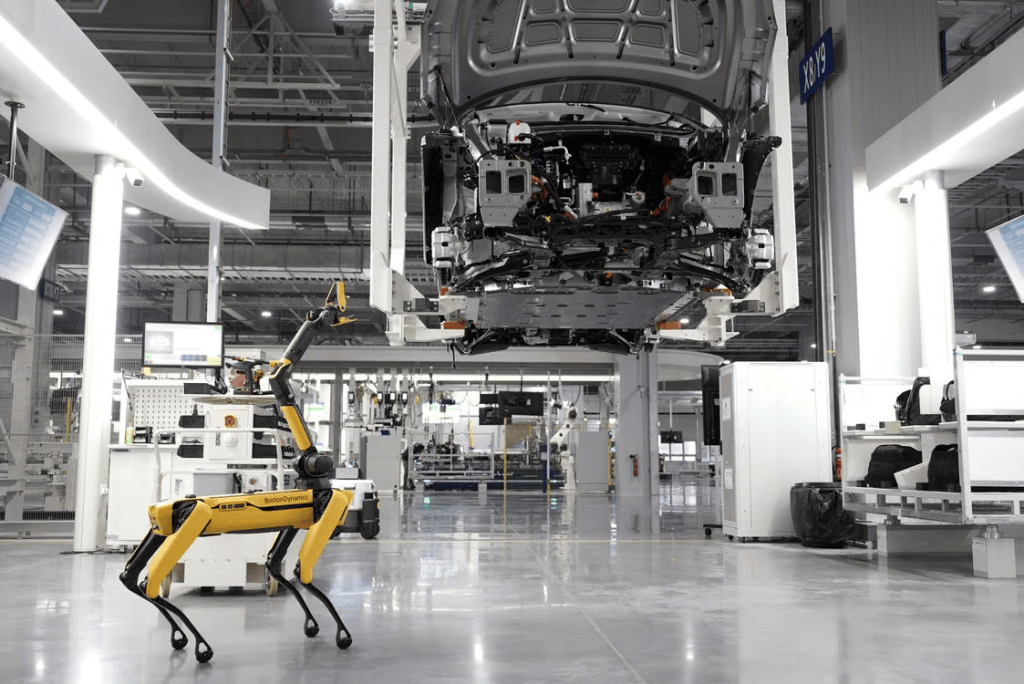
Initial quality is what most people experience first — and it’s where we’ll start.
Why Do Japanese Cars Have a Reputation for Better Quality?
Japanese automakers did not develop their reputation for reliability by accident. Manufacturers such as Toyota and Honda developed manufacturing and engineering philosophies that emphasized standardization, continuous improvement, waste reduction, process control, and solving problems at their source.
The Toyota Production System, Lean Manufacturing, and Kaizen
The Toyota Production System, commonly associated with Lean Manufacturing, fundamentally changed how manufacturers thought about production. Lean Manufacturing was a huge departure from the mass production system established by Henry Ford’s invention of the moving assembly line in 1913. Instead of simply building as many vehicles as possible as quickly as possible, the Toyota Production System focuses on eliminating waste, identifying problems, maintaining consistent processes, and continuously improving the way work is performed.
One of the most important concepts in lean manufacturing is Kaizen, which roughly translates to continuous improvement. The idea is simple: a process should never be considered finished. If a technician, manufacturing operator, or engineer discovers a better way to perform a task, the organization should learn from that improvement and incorporate it into the process. With mass manufacturing, the assembly line never stopped, even if a defect was present. With lean manufacturing, if a defect is found, the line stops to fix the problem before proceeding — this is a huge shift in mindset.

At Toyota’s Takaoka plant, this shift in mindset wasn’t theoretical — it was built into the physical assembly line itself. The landmark MIT study documented in The Machine That Changed the World, Womack, Jones, and Roos written in the 1990/1991 describe how, at Takaoka, every worker had the authority to stop the line, yet the line was almost never actually stopped, because problems were solved in advance and the same problem never occurred twice. The authors contrast this directly with General Motors’ practice at the time, where line-stopping authority was reserved for senior managers rather than the workers actually building the vehicle — a telling illustration of how differently the two companies thought about who was responsible for catching a defect in the first place.
This philosophy is particularly powerful in automotive manufacturing because a small problem repeated thousands of times can become a massive quality issue. Imagine a fastener that is difficult for an assembly operator to install. If that problem occurs once, it is insignificant. If it occurs 1,000 times per day, it becomes a manufacturing problem. If the same issue exists for five years, it becomes a systemic quality problem.
Lean manufacturing attempts to identify these problems early and eliminate the underlying cause rather than simply repairing the individual defect.
How Successfully Did American Automakers Adopt Lean Manufacturing?
Once Toyota’s system was documented and studied, all three major American automakers attempted to adopt pieces of it — but with very different results. Lean manufacturing isn’t just a collection of factory techniques like kanban boards, standardized work, or just-in-time inventory. It’s a complete management system built around empowering workers to expose problems, treating suppliers as partners, and continuously feeding what’s learned on the shop floor back into engineering. American automakers could — and did — copy the visible techniques. Copying the underlying management philosophy proved much harder.

GM’s experience is the most striking example of this gap. Through a joint venture with Toyota called NUMMI in Fremont California (later bought by Tesla), GM took over one of its own worst-performing plants and let Toyota rebuild it around the Toyota Production System — using the same American workforce and the same UAW labor agreement. The result was productivity and quality on par with Toyota’s plants in Japan, which proved the gap wasn’t about American workers or American culture. It was the management system. Yet GM struggled to spread those results beyond that single plant, in large part because the company tended to transfer individual techniques without transferring the deeper philosophy behind them — problems still tended to get fixed and moved past, rather than traced back to a root cause and used to change the system going forward.
Ford and Chrysler each made more visible progress at the factory level during this period, with real gains in manufacturing productivity and product development speed. But even here, the authors draw a distinction between a company getting better at lean production — improving how a given factory built vehicles — and becoming a lean enterprise, where that same discipline extends through product development, supplier relationships, and continuous improvement company-wide. By that broader measure, none of the Big Three had fully replicated what Toyota had built.
That distinction — between adopting lean techniques and adopting a lean system — is worth keeping in mind throughout the rest of this article, since it shows up again and again in how American and Japanese automakers approach quality and durability more broadly.
Design for Manufacturing Can Improve Vehicle Quality
Manufacturing quality begins long before a vehicle reaches the assembly plant. Engineers use Design for Manufacturing (DFM) principles to create products that can be consistently and efficiently manufactured. A good manufacturing design makes it easier for an assembly operator — or an automated system — to install a component correctly every time. DFM is also closely tied to vehicle serviceability, since a vehicle that’s easy to assemble on the line is often easier for a technician to service later.
This sounds simple, but it is incredibly important. If a component can only be installed correctly when an experienced operator performs a complicated sequence perfectly, the process has a high potential for variation. This is even more important when you remember that each operator usually has about 1 minute to perform the operation in their respective station.
If the component can only fit one way, uses standardized fasteners, has clear locating features, and requires minimal adjustment, the manufacturing process becomes much more robust. This leads to an important principle:
A vehicle that is easy to assemble is often easier to build consistently.
DFM therefore connects manufacturing and quality. The goal is not simply to make the vehicle inexpensive to manufacture. The goal is to design a system where the manufacturing process naturally produces a consistent product.
Standardization: Why Japanese Cars Often Feel Simpler
One of the most underrated contributors to automotive quality is standardization. Japanese automakers have historically made extensive use of standardized components, fasteners, manufacturing processes, and vehicle architectures. For instance, all Hondas use the exact same oil filter regardless of their engine, with the exception of the S2000.
For a technician, this can have a very noticeable effect. A vehicle that uses common fastener sizes, proven connectors, familiar component layouts, and shared assemblies becomes easier to manufacture, diagnose, repair, and maintain. The same principle applies inside the factory: when manufacturing operators repeatedly perform similar tasks using familiar components and tools, there are fewer opportunities for mistakes.
If an engine, transmission, electrical architecture, or suspension system is used across multiple vehicle models for many years, engineers have more opportunities to identify and eliminate problems — so you now have a proven system that is more robust and, as a result, has fewer quality issues in the field. This is the reason automakers expect a spike in warranty/ quality claims during the release or launch of a new generation, because during these initial vehicle releases, you are introducing new systems and new technology into the vehicle. An important phrase used inside the engineering community is “change is the enemy of quality.” The more you can commonize, the better the vehicle quality, since any time you introduce a change to a component, you open the door for a potential quality issue.
Finally, remember that most assembly plants are producing multiple vehicles down the same assembly line. If you have a proliferation of parts, there is always an opportunity for assembling the wrong part on the wrong vehicle, leading to initial quality issues.
This creates a feedback loop: more common parts → more experience → better problem identification → better fixes → improved future products.
Supplier Relationships Can Make or Break Initial Quality
One of the most overlooked factors affecting vehicle quality is the relationship between the automaker and its suppliers. Modern vehicles contain thousands of components, and an OEM does not manufacture every component itself. Suppliers produce everything from seats and wiring harnesses to electronic control modules, suspension components, fasteners, sensors, castings, and stamped components.
That means an automaker’s quality is heavily dependent on its suppliers. A supplier can build a technically excellent component, but the OEM and supplier must have a strong communication process to ensure the component consistently meets the intended requirements. This involves more than simply sending a drawing to a supplier — both parties have to keep each other in the loop. A change to the vehicle might affect the way a component interacts with a system or subsystem, and if the supplier isn’t aware of it, mistakes can be made. Likewise, any issue the supplier discovers must be communicated back to the OEM, since it could affect how the component interacts within the vehicle.
Several types of changes can quietly introduce risk:
- A component may be redesigned to reduce cost.
- A material may change.
- A manufacturing process may change.
- A supplier may change a production location.
- A component may be transferred between manufacturing plants.
Each change has the potential to affect quality. If the communication, validation, and change-management process is weak, a seemingly minor change can eventually become a customer problem.
A Real-World Example: GM vs. Chrysler
Bob Lutz, a prominent Swiss-American automotive executive who held top leadership roles at all three U.S. “Big Three” automakers (General Motors, Ford, and Chrysler) as well as BMW, wrote about this dynamic in his 2011 book Car Guys vs. Bean Counters. He described GM’s purchasing culture as highly transactional — the goal was often to negotiate the lowest possible piece price rather than to work with a supplier to improve the product as a whole.
Lutz contrasted this with a more collaborative model, where engineers and suppliers work together earlier in the development process, focused on making a part better and cheaper together rather than simply cheaper. A supplier that understands it will share in the savings — and that its engineering expertise is genuinely valued — has a very different incentive structure than one that’s simply being squeezed on price.
This matters for engineering, not just procurement, because a supplier often understands a component’s manufacturing process, tooling, materials, tolerances, and cost structure better than the OEM does. Treating that supplier purely as a bidder means losing access to a significant amount of engineering knowledge.
The Data Backs This Up
Real-world data reflects the same pattern. The OEM–Supplier Working Relations Index (WRI), which has tracked supplier sentiment toward major automakers since 2002, consistently shows that automakers treating suppliers as partners score meaningfully higher than those treating them as vendors to be squeezed.
- Toyota and Honda have remained structurally strong for over two decades, spending most of the index’s history in or near the “Good” range.
- General Motors has improved but still sits in the “Adequate” range, suggesting the more transactional purchasing culture Lutz described has softened over time, though a gap with Toyota and Honda remains.
- Ford shows one of the largest recent improvements of any OEM. After spending most of the 2000s in “Poor–Very Poor” territory, Ford has climbed steadily toward the “Adequate” range — a shift that lines up closely with a broader supplier-relationship overhaul at the company in the mid-to-late 2000s, alongside a measurable improvement in Ford’s own initial quality scores during the same period.
| Model Year | Ford IQS Score | Industry Average | Toyota IQS Score |
|---|---|---|---|
| 2006 | 127 | 124 | 106 |
| 2007 | 120 | 125 | 112 |
| 2008 | 112 | 118 | 104 |
| 2009 | 102 | 108 | 101 |
| 2010 | 93 | 109 | 117 |
(J.D. Power Initial Quality Study, problems per 100 vehicles — lower is better)
Alan Mulally became president and chief executive officer of Ford Motor Company on September 5, 2006, and served in that role until his retirement in July 2014. His arrival is a useful case study because it shows what happens when an automaker deliberately rebuilds its supplier relationships — and because the timing lines up almost exactly with a measurable shift in Ford’s quality data.
In American Icon, author Bryce Hoffman describes Mulally’s supplier strategy as part of his broader “Working Together” philosophy. Before Mulally, Ford’s various internal organizations often acted independently, and suppliers could find themselves caught between competing divisions within the same company — not unlike the fragmented purchasing culture Bob Lutz described at GM. Ford’s purchasing approach at the time was also heavily focused on driving down piece price, with relatively little attention paid to whether that pressure was actually sustainable for the supplier’s business. Mulally’s “One Ford” approach was designed to address both problems at once: it eliminated the internal fragmentation and presented suppliers with a single, unified Ford rather than several competing internal customers, while also shifting the underlying philosophy away from squeezing suppliers on cost and toward treating their long-term health as something Ford had a stake in.
It’s worth being careful here: correlation isn’t proof of causation, and Ford’s quality improvement during this period reflects many factors beyond supplier relationships alone, including manufacturing investment and product redesigns. But it’s a useful illustration that initial quality can improve relatively quickly, while durability results lag behind by design — a point we’ll come back to in Part Three.
Quality is not created at the end of the assembly line — it’s created throughout the entire product-development and supply chain. The relationship between an OEM and its suppliers is frequently overlooked, but it has a tangible, measurable impact on the quality customers actually experience.
Part Two: Quality vs. Durability
Quality and durability are closely related, but they measure different things.
Quality is largely concerned with whether the vehicle is built correctly and performs as intended, particularly when it is new — within the first 90 days. Durability asks a different question: how well does the vehicle continue to perform after thousands of miles, years of use, heat cycles, vibration, corrosion, and repeated operation?
A vehicle could have excellent initial quality but poor durability. For example, a vehicle might leave the assembly plant with no obvious defects but develop premature suspension, engine, transmission, or electrical failures after 80,000 miles. Most durability problems are engineering problems. Sometimes this is intentional: a part may be designed to wear out or fail after a certain mileage or timeframe as a form of planned obsolescence or routine maintenance, ensuring the customer returns for replacement parts. For instance, an automaker might choose to put softer tires on the vehicle for vehicle dynamics or ride quality, but this could also result in the tires wearing down faster. Other times, it’s unintentional, resulting from engineers underestimating the loads a part or system would be subject to, which leads to premature failure.
The opposite can also happen. A vehicle might have a few minor assembly or software problems when new but have a drivetrain that continues operating reliably for hundreds of thousands of miles.
When people ask whether a vehicle is good, they usually mean a vehicle that achieves both: high initial quality + strong long-term durability.
This distinction matters when comparing automotive manufacturers, because the systems required to achieve good initial quality are not exactly the same systems required to achieve long-term durability. Part One covered the systems behind quality. The rest of this article turns to durability.
Part Three: Durability
Why Is Vehicle Durability So Important?
Initial quality is important because it determines how many problems a customer experiences shortly after purchasing a vehicle. Durability is important because it determines how well that vehicle continues to perform throughout its useful life.

Automotive durability engineering involves exposing components and vehicles to conditions that simulate years of real-world operation. Engineers evaluate things such as:
- Heat and cold
- Humidity and corrosion
- Vibration and repeated loading
- Thermal cycling
- Road impacts
- Water exposure and dust
- Component fatigue and long-term wear
The goal is not simply to determine whether a component works. The goal is to determine how long it will continue to work.
Why Do Toyota and Honda Use So Many Proven Components?
Another major difference historically associated with Japanese automotive engineering is the willingness to refine proven technologies rather than constantly reinvent them. This does not mean Japanese automakers avoid innovation. Instead, many Japanese manufacturers have historically emphasized incremental improvement and extensive validation before introducing major changes.
For example, naturally aspirated engines and relatively conventional mechanical systems have historically been common across many Japanese vehicle lines. Fewer components and less mechanical complexity can provide fewer potential failure points — this is particularly important for durability, since every additional component creates another potential failure mode.

For example, a turbocharger drastically improves vehicle performance by increasing an engine’s power output without expanding its physical size of the engine. However, this comes at a cost of additional complexity, mass, and higher thermal and mechanical loads on the engine. None of this means complexity is inherently bad — like everything else in engineering, it’s all trade-offs. Modern vehicles require advanced technology to meet emissions, safety, performance, fuel economy, and customer expectations, so engineers are sometimes willing to take on this additional complexity because the benefit outweighs the downside.
The engineering challenge is determining when additional complexity provides enough value to justify the additional failure modes and manufacturing challenges it creates.
Durability Testing: Finding Problems Before Customers Do
One of the most important responsibilities of automotive engineering is discovering failures before a vehicle reaches the customer. Manufacturers use laboratory testing, proving grounds, accelerated durability testing, environmental testing, computer simulation, component testing, and vehicle-level testing to identify potential failures.
This process can be expensive, but discovering a failure during development is dramatically cheaper than discovering the same failure after hundreds of thousands of vehicles have been sold. A supplier may discover that a component cracks after a certain number of cycles. A durability engineer may discover that a mounting bracket is experiencing unexpected vibration. A corrosion engineer may discover that water is accumulating in a particular area. A teardown may reveal that a component has significantly more wear than expected.
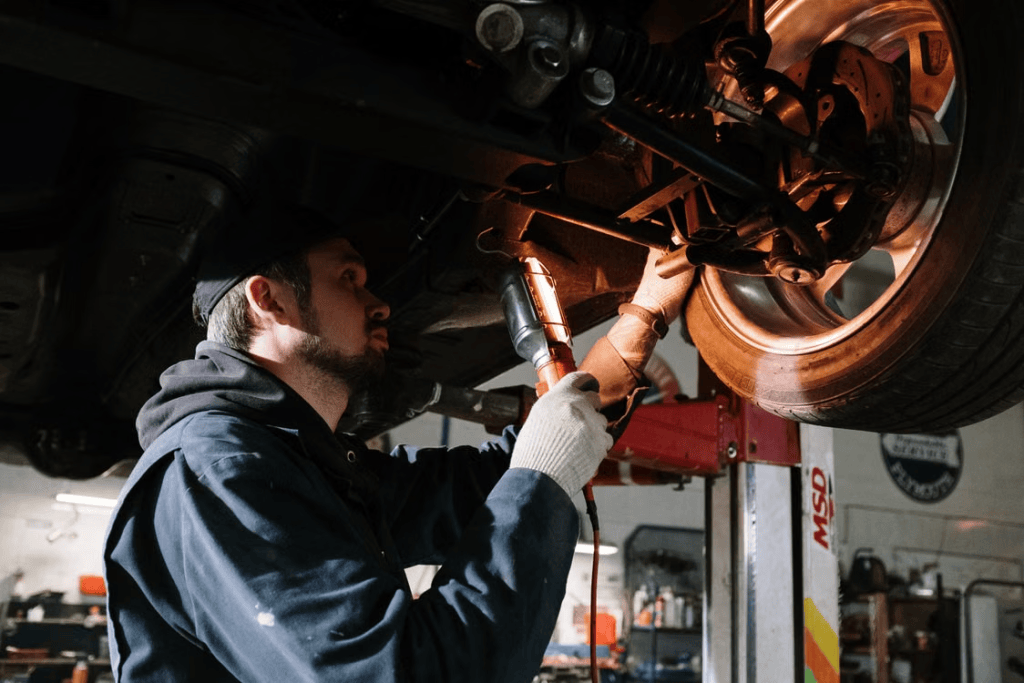
Each discovery provides an opportunity to improve the vehicle before customers experience the problem. One interesting wrinkle: durability requirements are set by each company based on its own learnings over many years, and that can create some funny internal blind spots. When talking about full-size trucks, for example, each company tends to believe it has the best truck because — in its own internal testing — the competition can’t complete its durability cycle. Having worked at both General Motors and Ford, I heard the exact same claim at each company about the other’s trucks.
So which truck is actually the most durable? Is it really about which company builds the best truck, or is it that each company simply designs out the failure modes specific to its own durability cycle? In reality, the truck with the best durability often comes down to whichever durability cycle most closely matches your own driving habits.
This is one of the reasons engineering validation and durability testing are so important to long-term vehicle reliability.
A Cautionary Tale: GM’s Front-Wheel-Drive Conversion
What happens when a new design reaches customers without enough validation? Lutz offers a vivid example in Car Guys vs. Bean Counters. In GM’s early-1980s product program, the goal was to meet CAFE fuel-economy standards by converting its large, large-luxury, and personal-luxury cars to transverse front-wheel drive (TFWD) by 1985. He recounts that the engineering community at the divisions voiced considerable concern about their ability to make that conversion in time, but leadership pushed ahead anyway (Lutz, 2011).
The centerpiece of the problem, in Lutz’s telling, was the four-speed TFWD automatic transmission (the THM440). It existed only on paper when the decision was made in 1979, then went into production without proper validation and failed at very high rates, often two or three times during the first customer’s ownership of the car. Other first-generation TFWD issues followed, including a steering gear “morning sickness” (a quasi-lockup of the steering on cold mornings), air conditioning compressor problems, and radiator failures. GM simply had little experience with the layout, so these durability problems were not discovered until customers found them.
Lutz also describes asking Alex Mair, GM’s Group VP of Technical Staffs, how a company that had led the industry in automatic transmissions could end up with so many problems. Mair’s answer was that GM had allowed many of its experienced automatic-transmission engineers, the people holding the tribal knowledge, to retire in the mid-1970s around the first oil embargo. That is a durability lesson as much as a management one: validation programs depend on people who know where designs tend to fail, not just on test equipment.
The takeaway ties directly back to the points above. Durability testing exists to find failures before customers do, and it only works when a program has the time, the testing, and the experienced engineers to do it. For a worked example of how a validation plan is structured, see our Vehicle Validation Plan (DVP&R) example.
Durability Isn’t Free: The Engineering Trade-Offs Behind a Longer-Lasting Vehicle
You may be thinking to yourself, “Well, why not just make every component much more durable?” Like everything else in engineering, the answer is never that simple.
You can usually increase the durability of a component by softening its radii, since sharp corners create stress concentrations. Changes like these are low-hanging fruit that are usually caught early by leveraging CAE (computer-aided engineering) — they’re inexpensive, easy to implement, and effectively no-brainers. But that’s about where the “free beer” ends with durability.
More frequently, if an engineer wants to increase the life of a component, it requires adding cost and mass to the vehicle. Engineers have to consider costlier, higher-strength materials, or increase the gauge and thickness of a part. That can be a hard sell if the vehicle already runs on a thin profit margin. Adding mass is also something automakers actively try to avoid, since it can quickly trigger a mass-compounding spiral — where added mass in one area forces engineers to add mass elsewhere just to compensate, and the cycle feeds on itself, the same dynamic that drives automakers toward lightweight materials in automotive design. As vehicle weight increases, you also take a hit on overall vehicle efficiency and fuel economy, which is another outcome automakers try to avoid. That is why the answer is never that simple or that easy. Designing a vehicle is an ultra-complex optimization problem, and the vehicle that rolls down the assembly line is the final solution of the automaker doing its best to optimize its final product for the intended customer.

The Trade-Offs of Durability Testing
Durability testing infrastructure isn’t cheap to maintain — proving grounds, environmental chambers, corrosion labs, and teardown facilities all require significant ongoing investment. Because of that cost, this kind of testing capacity is also one of the first places automakers look when cutting costs, and cuts to it are worth watching as an indicator of how much a company continues to prioritize long-term durability versus near-term savings.
In late 2024, General Motors announced it would stop using its Yuma Desert Proving Grounds in Arizona for hot-weather vehicle testing, and permanently closed the Durability, Corrosion, and Teardown departments at its Milford Proving Grounds in Michigan, resulting in dozens of hourly and salaried layoffs (Bomey, 2024).
This is a useful real-world example of the trade-off engineers and businesses are constantly weighing: durability testing directly protects long-term reliability, but it’s also a cost center that doesn’t show up in next quarter’s initial quality scores. Whatever the underlying business reasoning behind any specific decision, cuts like these are a reminder that durability testing capability is not a fixed asset. It can be scaled up or scaled back, and when it’s scaled back, the industry’s ability to catch long-term failure modes before customers do shrinks along with it.
Why American Cars Are Not Simply “Bad”
It’s important to avoid turning this discussion into a simple Japanese-versus-American argument. American automakers have produced many highly reliable vehicles and engines. Likewise, Japanese automakers have produced vehicles with serious reliability problems. The automotive industry is constantly changing, and modern American vehicles use sophisticated manufacturing systems, advanced quality controls, extensive validation, and highly capable suppliers.
Full-size trucks and SUVs are a good example. Lutz argues that Detroit’s truck teams, helped by decades of relative freedom from top-management interference, knew their few competitors, knew their customers, and kept pushing to raise the bar with each new generation. That, in his view, is why Japanese entries such as the Tundra and Titan never did more than dent the Detroit Three’s lead in the big-truck segment, despite the media repeatedly predicting that Detroit’s last stronghold was about to fall (Lutz, 2011).
Japanese manufacturers also face the same challenges confronting everyone else. Modern vehicles are becoming more complex: the shift to electrification is adding high-voltage systems and new electronic architectures, advanced driver-assistance systems require additional sensors and software, connected vehicles require more computing hardware, and emissions regulations demand increasingly sophisticated powertrain controls. All of these changes create additional opportunities for failure.
As discussed earlier, an automaker must constantly balance two risks: incorporating new technology too early, before it has been fully validated, versus incorporating it too late and missing out on sales from customers who want the latest and greatest technology in their vehicles. It’s also worth remembering that the automotive industry is highly dynamic — the automaker with the best quality today is not guaranteed to have the best quality tomorrow.
The quality advantage historically associated with Japanese vehicles should not be viewed as a permanent law of automotive engineering. It’s the result of systems, processes, and decisions — and systems can change.
The Future of Automotive Quality
The automotive industry is entering one of the largest technological transitions in its history. Electric vehicles, software-defined vehicles, advanced driver-assistance systems, connected vehicles, new battery technologies, and increasingly complex electrical architectures are changing what engineers mean by automotive quality.
Some traditional mechanical failure modes may disappear. At the same time, new failure modes will emerge. A vehicle may no longer have a traditional transmission, but it may have hundreds of electronic control functions communicating across multiple networks. A mechanical component may become more reliable while the software controlling it becomes more complex.
The fundamentals, however, remain remarkably similar: control variation, standardize processes, validate designs, understand failure modes, listen to manufacturing operators and technicians, work closely with suppliers, solve problems at the root cause, and continuously improve. These principles are not uniquely Japanese. They are simply good engineering.
So, Why Do Japanese Cars Have a Reputation for Better Reliability?
The answer is not that Japanese engineers possess some secret technology American engineers don’t understand. The difference is better explained by the systems that developed around the engineering. Japanese automakers built manufacturing cultures around Lean Manufacturing, the Toyota Production System, Kaizen, standardization, proven engineering, supplier collaboration, process control, and continuous improvement.
Those systems produce a powerful compounding effect: better design makes manufacturing easier, easier manufacturing reduces variation, lower variation improves initial quality, better quality data reveals problems earlier, better problem solving improves future designs, more standardized and proven components reduce complexity and failure risk, better supplier communication reduces variation, and better validation identifies durability problems before customers experience them.
The result is not one breakthrough. It’s thousands of small engineering and manufacturing decisions working together.
That may ultimately be the biggest lesson from the Japanese automotive industry: reliability is not something added to a vehicle at the end of development — it’s engineered into the vehicle from the beginning. And perhaps the most important lesson for American automakers is that improving quality isn’t simply about building better cars. It’s about building a better system for designing, manufacturing, validating, and continuously improving those cars.
Final Thoughts
The debate over Japanese versus American automotive quality is often reduced to a simple question: “Which country makes better cars?”
The more interesting engineering question is: “What manufacturing and engineering systems consistently produce better vehicles?”
That question leads to a much more useful answer. Quality and durability are the result of a system. The vehicle design, manufacturing process, supplier network, validation program, assembly plant, engineering organization, and company culture all contribute to the final product.
Japanese automakers earned their reputation by developing systems that continuously identify problems, reduce variation, standardize processes, and improve over time. American automakers have learned many of these same lessons and continue to evolve.
Ultimately, the best automotive manufacturers are not the ones that never experience problems. They are the ones that find problems early, understand why they happened, fix the root cause, and make sure the same problem does not happen again.
Lee Iacocca, who led both Ford and Chrysler through some of the most consequential periods in American automotive history, put it simply:
“Hot styling still sells them, but quality keeps them sold.”
— Lee Iacocca, Where Have All the Leaders Gone?
That is what quality engineering is really about.
Frequently Asked Questions About Japanese vs. American Car Reliability
Why are Japanese cars considered more reliable than American cars? Japanese cars have developed a strong reputation for reliability because manufacturers such as Toyota and Honda have historically emphasized standardized manufacturing processes, continuous improvement, proven engineering, supplier quality, and extensive validation. However, reliability varies by specific vehicle, engine, transmission, model year, and manufacturer.
Are Japanese cars actually more reliable than American cars? Japanese vehicles have historically performed strongly in many reliability and durability comparisons, but there is no universal rule that every Japanese vehicle is more reliable than every American vehicle. Reliability depends heavily on the specific vehicle and the engineering and manufacturing systems behind it.
Why are Toyota cars so reliable? Toyota’s reputation for reliability is closely associated with the Toyota Production System, Lean Manufacturing, Kaizen, standardized processes, extensive validation, and an emphasis on identifying and eliminating the root causes of manufacturing problems.
Why are Honda engines so reliable? Honda has historically emphasized relatively simple, efficient, and well-understood engine architectures combined with extensive development, manufacturing standardization, and continuous improvement. However, reliability varies between specific Honda engines and model years.
What is the difference between vehicle quality and durability? Vehicle quality generally describes how well a vehicle is assembled and performs when it is new, while durability describes how well the vehicle continues to perform after years of use, mileage, thermal cycling, vibration, corrosion, and other environmental stresses.
Why do American cars have a reputation for poor quality? The historical reputation developed from a combination of manufacturing variation, inconsistent quality, complex organizational structures, supplier issues, product-development decisions, and intense competition from Japanese manufacturers that introduced highly effective Lean Manufacturing and quality systems.
Does Lean Manufacturing improve vehicle quality? Lean Manufacturing can improve quality by reducing process variation, eliminating waste, standardizing work, identifying problems early, and encouraging continuous improvement. It’s not simply about producing vehicles faster — it’s about creating a more controlled and efficient production system.
How do suppliers affect automotive quality? Suppliers manufacture a large percentage of the components used in modern vehicles. Poor communication, inconsistent manufacturing capability, uncontrolled process changes, inadequate validation, or unclear engineering requirements can all contribute to vehicle quality problems.
Why is supplier communication important in automotive manufacturing? Automakers and suppliers must continuously communicate about specifications, tolerances, material requirements, manufacturing capability, engineering changes, validation, and quality issues. Strong communication allows problems to be identified and corrected before they reach the customer.
What is Kaizen in automotive manufacturing? Kaizen is a philosophy of continuous improvement. Rather than assuming an existing manufacturing process is perfect, engineers and manufacturing teams continuously look for small improvements that reduce waste, improve quality, increase efficiency, and prevent recurring problems.
Does a more complicated vehicle have worse reliability? Not necessarily. Modern vehicles are significantly more complex than older vehicles because they must meet stricter safety, emissions, efficiency, performance, and technology requirements. Complexity creates additional potential failure modes, but good engineering, validation, and manufacturing controls can make complex systems highly reliable.
Why do some old Japanese cars last so long? Many older Japanese vehicles used relatively simple and well-understood mechanical systems, standardized components, and conservative engineering approaches. Their durability was also supported by widespread parts availability and extensive technician familiarity with common designs.
Are American cars becoming more reliable? American automakers have made significant improvements in manufacturing technology, quality control, validation, and supplier management. The gap between manufacturers is not static, and modern vehicle quality should be evaluated by specific model and model year rather than assuming an entire country produces either good or bad vehicles.
What makes a vehicle durable? Vehicle durability depends on component design, materials, manufacturing consistency, corrosion protection, thermal management, validation testing, supplier quality, assembly quality, and how effectively engineers identify and eliminate potential failure modes.
What is the most important factor in automotive reliability? There is no single factor. Reliable vehicles result from the interaction of good engineering design, robust manufacturing processes, supplier quality, validation, durability testing, effective problem solving, and continuous improvement.
References
- Bomey, N. (2024, November 15). GM cuts jobs, hourly employees at global technical center in Warren. Detroit Free Press. https://www.freep.com/story/money/cars/general-motors/2024/11/15/gm-cuts-jobs-hourly-employees-global-technical-center-warren/76329328007/
- Hoffman, B. G. (2012). American Icon: Alan Mulally and the Fight to Save Ford Motor Company. Crown Business.
- Iacocca, Lee A., and Catherine Whitney. Where Have All the Leaders Gone? Scribner, 2007.
- Lutz, R. A. (2011). Car Guys vs. Bean Counters: The Battle for the Soul of American Business. Portfolio/Penguin.
- Womack, J. P., Jones, D. T., & Roos, D. (1990). The Machine That Changed the World. Rawson Associates/Scribner.
- J.D. Power. Initial Quality Study (IQS) and U.S. Vehicle Dependability Study (VDS), various years.
Discover more from Engineering Cheat Sheet
Subscribe to get the latest posts sent to your email.


