
Electricity and Magnetism: Circuits, Fields, Induction & Motors Study Guide
Electricity and magnetism explains electric charge, fields, circuits and magnetic forces, and it underpins motors, power systems and electronics. This study guide organizes the articles from fundamentals through circuits, AC analysis and motors, with practice material along the way.
- Start here
- Electric fields & potential
- Magnetism & induction
- Circuit components & DC
- AC circuits & filters
- Motors & vehicle applications
- Waves & optics
- FAQ
Start here
The fundamentals to learn first.


Electric fields & potential
Gauss’s law, potential energy, dipoles and capacitance.

Electric Flux & Gauss’s Law
How flux and Gauss’s law describe electric fields.

Electric Potential & Energy
Potential, energy and the relationships for charged particles.

Dipole & Quadrupole Fields
How dipoles and quadrupoles shape electric and magnetic fields.

Capacitance & Dielectrics
How capacitors store energy and what dielectrics change.
Physics II Practice Exams
Practice material for electricity and magnetism.
Magnetism & induction
Magnetic fields, magnets, solenoids and Maxwell’s equations.


Circuit components & DC
Dividers, capacitors, inductors, diodes and sources.

Voltage & Current Division
How dividers split voltage and current.

Capacitor Basics
What it is, types and how it works.

Inductors
How coils create magnetic fields and shape electrical systems.

What Is a Diode?
Symbol, types and how diodes work.

Electric Battery Explained
How cells store energy chemically and release electricity.

Understanding Solar Energy
How energy from the sun is generated and used.
AC circuits & filters
Phasors, impedance, frequency response and filters.
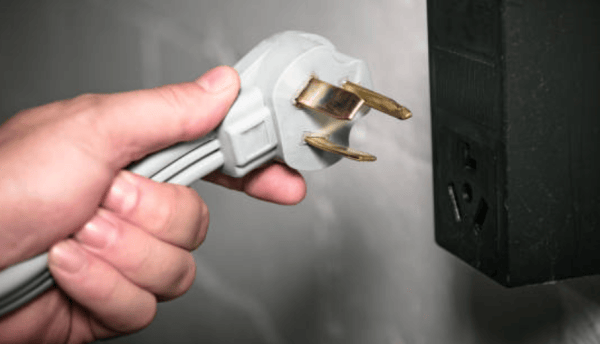
AC vs. DC Circuits: A Beginner’s Guide
The basics of alternating current circuits.
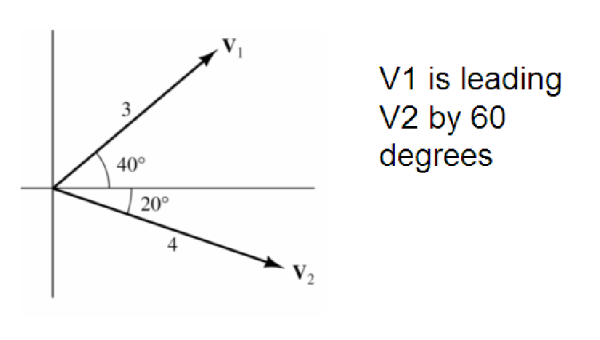
Phasors in AC Circuits
How phasors relate voltage, reactance, impedance and current.

Impedance in an AC Circuit
What impedance is and how to work with it.

Frequency Response, Filters & Resonance
How circuits respond across frequencies.

Cascade & Bandpass Filters
How cascaded filters shape signals.
Motors & vehicle applications
Electric machines and electrical systems in vehicles.
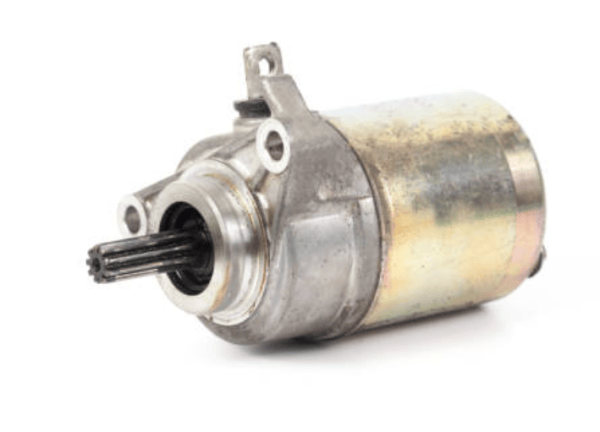
DC Motor Basics
How DC motors work, their parts, types and torque.
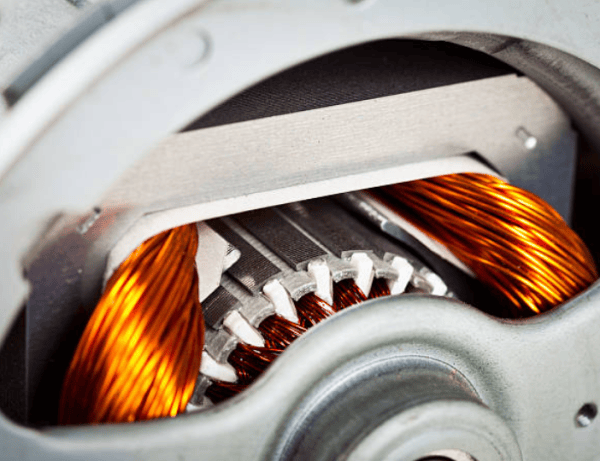
DC Motor Design
Electrical modeling of a DC motor.
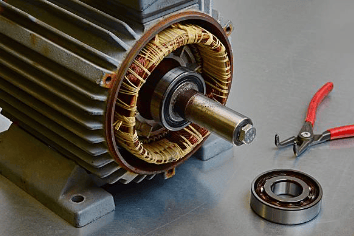
AC Motor Explained
Types, speed and power formulas.

Automotive Electrical & Electronic Systems
How a car’s electrical systems fit together.

Car Energy Management: Hybrid Sports Car Case Study
Energy management and optimization in a hybrid.
Waves & optics
Mechanical waves, ray optics and interference.


Frequently asked questions
What is electromagnetic induction?
Electromagnetic induction is the production of an electric current by a changing magnetic field, first uncovered by Michael Faraday. It is the principle behind generators and transformers.
What is Gauss’s law?
Gauss’s law relates the electric flux through a closed surface to the net charge enclosed by that surface. It is used to find electric fields for symmetric charge distributions.
What is the difference between AC and DC?
Direct current flows in one direction, while alternating current periodically reverses direction. Household outlets supply AC.
What is impedance?
Impedance is the total opposition an AC circuit presents to current, combining resistance with the reactance of capacitors and inductors.
Prefer a simple list? See every article in the Electricity and Magnetism category, or browse all categories.