
Automotive Package Engineering: Guides, SAE Standards & Case Studies
Automotive package engineering fits a vehicle’s systems, occupants and components into a defined space while meeting regulations, ergonomics and manufacturing needs. These guides cover how package engineers work, from early benchmarking and requirements through occupant packaging and the SAE standards behind seating, reach and visibility.
Start here
Three articles that explain the big picture.

Vehicle Package Engineering & Integration: 12 Key Tasks
The cross-domain work of bringing every subsystem together into a safe, compliant, manufacturable vehicle.

Vehicle Systems Explained
How the major systems of a car work together, and why changing one component ripples through the rest.

Automotive Interior Design: An Occupant Package Case Study
Designing the cabin around the people who sit in it: seating, controls, sightlines and comfort.
Planning & requirements
How a vehicle program turns customer needs into engineering targets.

Vehicle Benchmarking Explained
Compare against competitors to set realistic targets, with a preliminary design example.

What Is Quality Function Deployment (QFD)?
Translate customer needs into measurable engineering requirements, with an automotive example.

Vehicle Program Timing & Conceptual Design
A worked example using a hypothetical redesign of the Toyota Sequoia.
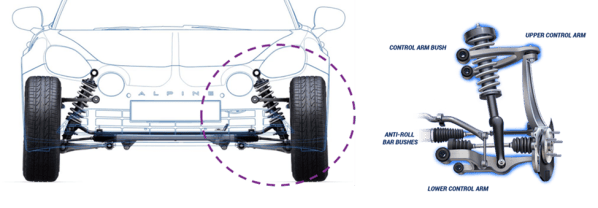
Automotive Suspension Design Process
Requirements, interfaces and trade-offs, from customer needs to a working suspension.

Vehicle Validation Plan (DVP&R)
What validation is and how a design verification plan is built, with a worked example.
Occupant packaging & SAE standards
The reference practices package engineers use to size seats, reach, vision and vehicle dimensions.

SAE J826: The H-Point Manikin
The tool used to locate the seating reference point that the seating package is built around.

SAE J941: Driver Eye Locations (Eyellipse)
A statistical model of where drivers’ eyes sit, used to design for a whole population.

SAE J1050: Driver’s Field of View
How to describe and measure what a driver sees directly and through mirrors or cameras.

SAE J287: Driver Hand Control Reach
How reach envelopes are defined so controls can be placed within the driver’s reach.

SAE J1100: Motor Vehicle Dimensions
The standard that defines how vehicle dimensions are measured and reported.

Car Seat Comfort: A Corvette Bucket Seat Case Study
The measurable factors that make a seat comfortable, applied to a real seat.
Case studies
Package engineering applied to real vehicles.


Frequently asked questions
What is automotive package engineering?
Automotive package engineering is the process of fitting a vehicle’s systems, components and occupants into a defined space while meeting regulatory, ergonomic and manufacturing requirements.
What does a package engineer do?
A package engineer lays out and integrates components and occupants within the vehicle, using standards such as the SAE J-practices and tools such as interface diagrams to make sure everything fits and works together.
What is the eyellipse?
The eyellipse is a three-dimensional statistical model of where drivers’ eyes are likely to be located in a vehicle. It is defined in SAE J941 and used so designs work for a whole population of drivers.
What is an H-point?
The H-point is the hip pivot point of a seated occupant. The H-point manikin described in SAE J826 is used to locate the seating reference point that the seating package is measured from.
Prefer a simple list? See every article in the Automotive Package Engineering category, or browse all categories.