
Chassis Design: Suspension, Springs, Brakes & Vehicle Dynamics Guide
The chassis carries the vehicle’s loads and controls how it rides, handles and brakes. These guides cover suspension design, springs and sway bars, roll and ride simulation, brake system design and the structures that support them.
Start here
The big picture of vehicle systems and suspension design.

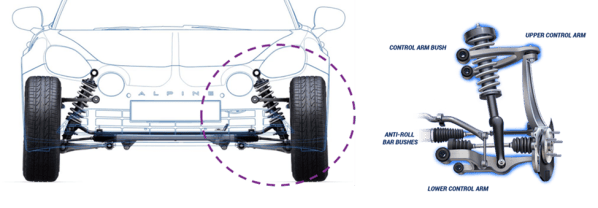
Springs & sway bars
The parts that control wheel motion.
Suspension loads & dynamics
Forces, roll and ride quality.

Brakes
Braking in conventional and electrified vehicles.


Structure & durability
Frames and fatigue.


Frequently asked questions
What does a vehicle chassis do?
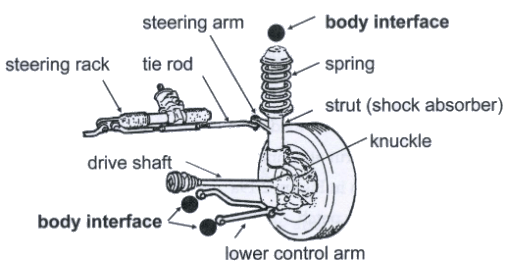
The chassis supports the vehicle’s loads and connects the wheels, suspension, steering and brakes to the body, controlling ride, handling and braking.
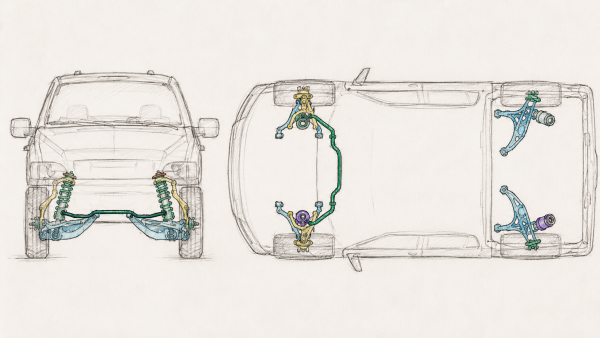
What does a sway bar do?
A sway bar, or anti-roll bar, links the left and right wheels of an axle to resist body roll when cornering.
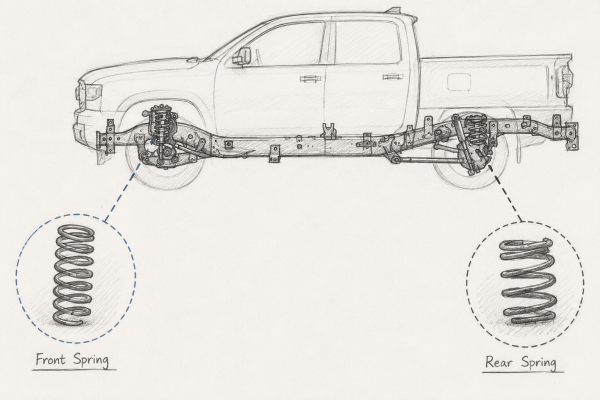
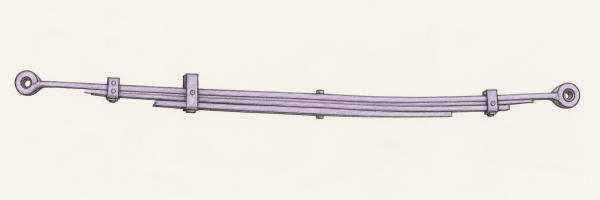
What is the difference between a coil spring and a leaf spring?
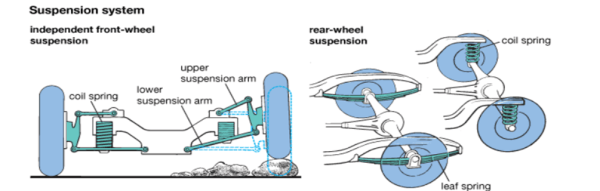
A coil spring is a helical steel spring commonly used in passenger-car suspensions, while a leaf spring is a stack of curved steel strips often used on trucks and heavy vehicles.
Why does vehicle mass affect brake design?
Heavier vehicles carry more kinetic energy, so the brakes must absorb and dissipate more energy to stop in the same distance.
Looking for something else? Browse all categories.