
Fluid Dynamics: Aerodynamics, Pipe Flow, Pumps & CFD Guide with Lab Experiments
Fluid dynamics describes how liquids and gases move and the forces they exert. These guides cover fluid properties and classic lab experiments, vehicle aerodynamics, computational fluid dynamics, and the design of pumps, valves and piping systems.
Start here
Fluid properties and flow regimes.


More lab experiments
Surface tension and jet forces.


Aerodynamics
Drag, lift and wind noise.

Automotive Aerodynamics 101
How airflow around a vehicle affects drag, noise and stability.

Understanding Car Wind Noise
Where wind noise comes from and how it enters a vehicle.

Drag Forces on Objects in a Wind Tunnel
Drag coefficient versus Reynolds number for spheres.

Drag Forces on a Wing Platform
Comparing a swept wing and an elliptical wing.
Pumps, valves & piping systems
Fluid systems designed and tested.


Related
Energy storage devices.

Frequently asked questions
What is the Reynolds number?
The Reynolds number is a dimensionless ratio of inertial to viscous forces that helps predict whether flow is laminar or turbulent.
What is the Moody diagram used for?
The Moody diagram gives the friction factor for flow in a pipe as a function of Reynolds number and relative roughness, so engineers can estimate pressure loss.
What is computational fluid dynamics?
Computational fluid dynamics (CFD) uses numerical methods to simulate fluid flow and its interaction with surfaces, and is widely used in engineering design and research.
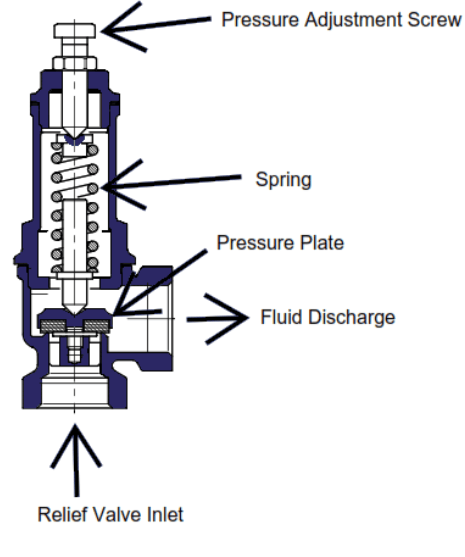
What does a relief valve do?
A relief valve opens at a set pressure to release fluid, which keeps pressure vessels and other equipment from exceeding their pressure limits.
Looking for something else? Browse all categories.